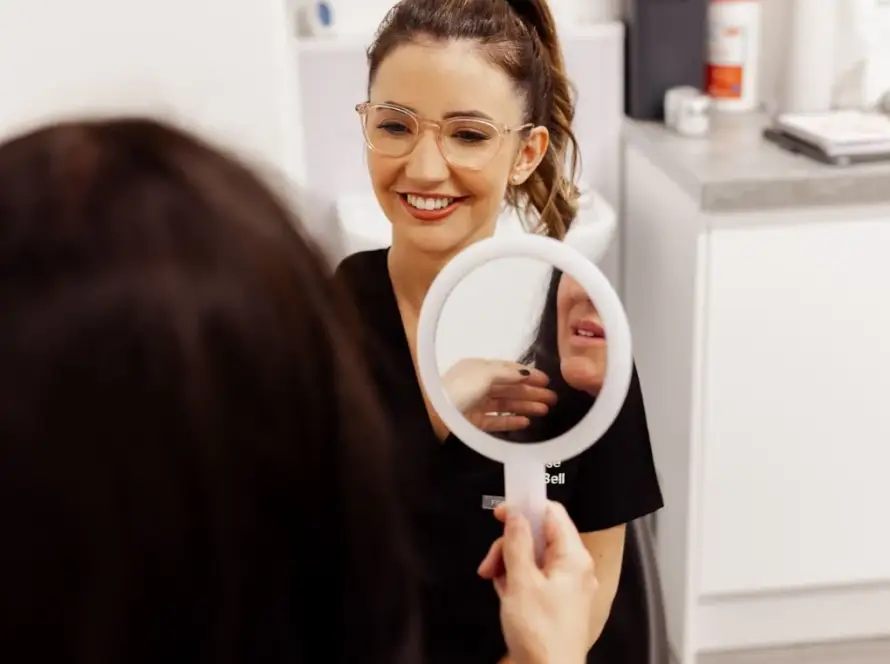
Lip filler migration describes filler sitting outside the intended area of the lip, often above the upper lip border. It can create persistent fullness, an uneven contour, or a less defined lip shape, but it cannot be reliably diagnosed from a photograph or in the first days after treatment. Swelling, bruising, natural asymmetry, and the normal anatomy around the mouth can all temporarily alter the appearance of the lips.
If you are concerned about a change after lip filler, avoid rushing into further treatment. A professional assessment is the safest next step, particularly if the area remains uneven once healing has settled, or if you have had repeated treatment over time.
What can lip filler migration look like?
When filler has moved beyond the lip border, it is most often noticed around the upper lip. Some people describe a soft “shelf”, ledge, or fullness between the upper lip and the base of the nose. Others notice that the vermilion border, the line between the coloured part of the lip and surrounding skin, looks less crisp than before.
Possible features that warrant assessment include:
- persistent fullness above the upper lip once the usual healing period has passed;
- a blurred or raised upper lip border;
- new asymmetry or an uneven outline;
- firmness, lumpiness, or an area that feels different from the rest of the lip; and
- a result that looks progressively overfilled after several top-up appointments.
These changes do not automatically mean that filler has migrated. In the first few days after treatment, swelling can be uneven and can make lips appear larger, less symmetrical, or less defined than their settled result. Lip filler is often reviewed at around two weeks, when early inflammation and swelling have usually reduced.
For more detail on the normal recovery period, read our guide to how lip filler results settle and vary.
Why it is not always straightforward to assess
The appearance of the lip area is influenced by more than filler alone. Natural facial anatomy, lip movement, previous treatment, skin quality, age-related changes, and residual swelling can all affect the outline around the mouth. A clinician therefore needs to assess the lips in person, rather than relying on a single image or comparison with a social-media trend.
A thorough review should consider when you were treated, the type and amount of product used where known, your previous filler history, the areas injected, how the lips have changed over time, and whether there are symptoms such as pain, tenderness, redness, or recurrent swelling.
Migration is one recognised filler-related concern, alongside issues such as contour irregularity, asymmetry, and nodules. Published expert guidance also makes clear that filler complications need to be assessed according to their timing and clinical presentation, rather than assumed from appearance alone. Expert consensus recommendations on soft-tissue filler complications support an individualised approach to assessment and management.
Clinical Note from Clinic 22
At Clinic 22, lip filler treatment planning considers lip shape, facial balance, medical history, and the desired outcome. Where existing filler is present, the area is assessed before any further treatment is considered.
What can contribute to lip filler migration?
There is rarely one simple explanation. The lips are highly mobile, delicate structures, and treatment needs to work within the capacity of the individual tissue. Factors that may contribute include the amount of filler already present, repeated treatment before previous filler has been fully assessed, product characteristics, injection depth and technique, and the anatomy and movement of the lips.
Adding more filler to an area that already appears full or poorly defined may make the result look less balanced. This is why a gradual approach, careful product selection, and assessment of existing filler are important parts of treatment planning.
If there are concerns about excess product, lumpiness, or migration, a plan to address the existing filler may be more appropriate than a routine top-up.
What to do if you think your lip filler has migrated
If you are still within the early healing period
Do not judge the final result in the first few days. Mild swelling, tenderness, bruising, and temporary asymmetry are common after lip filler, and usually improve as the lips settle. Follow the aftercare given by your practitioner, and do not massage or press the area unless you have been specifically advised to do so.
It is also sensible to avoid booking extra filler simply to correct an appearance that may still be swelling-related.
If the change persists after healing
Arrange a review with the original practitioner where possible, or seek assessment from an appropriately qualified and experienced medical aesthetics professional. Bring any useful information you have, including the date of treatment, product name, amount used, treatment records, and photographs taken before and after treatment.
Depending on the assessment, the most appropriate option may be to leave the area alone and review it, avoid further filler, or consider treatment to modify or dissolve existing hyaluronic acid filler. Dissolving is not automatically necessary, and it is not suitable for every concern or every filler type. It should only be considered after an informed clinical assessment of the product used, the area involved, and the potential benefits and limitations.
When to seek prompt advice
Migration itself is usually an aesthetic concern rather than an emergency. However, contact your treating practitioner promptly if you develop worsening pain, marked or increasing swelling, significant redness or heat, discharge, persistent lumps, or skin colour changes.
Severe pain, whitening or grey-blue mottling of the skin, a cold area of skin, or any visual disturbance after filler treatment require urgent medical attention. These symptoms are not typical signs of migration and need immediate assessment because they may indicate a more serious filler complication.
Our lip filler safety, risks, side effects, and aftercare guide explains expected recovery effects and when to contact the clinic.
The key point
A blurred upper lip border or persistent fullness can be concerning, but lip filler migration cannot be confirmed through self-assessment alone. Allow early swelling to settle, avoid adding more product to a lip that needs review, and arrange an in-person assessment if the change persists. Careful evaluation of your lip anatomy and existing filler provides the clearest route to a safe, natural-looking next step.

Why Choose Clinic 22
Clinic 22 is a nurse-led medical aesthetics clinic in Kilmarnock and Saltcoats, where every treatment is planned with a focus on safety, suitability, and natural balance. All treatments are tailored following a detailed consultation, during which your facial structure, skin quality, medical history, and treatment goals are assessed to develop a plan specific to you.