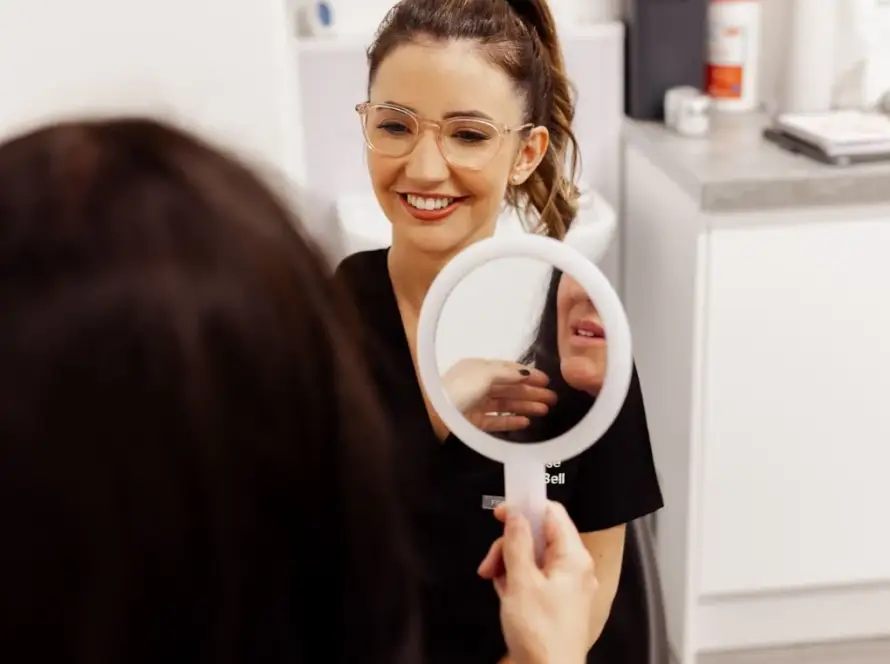
Polynucleotide treatment usually involves little downtime. The most common short-term effects are small raised injection points, redness, swelling, tenderness, and occasionally bruising. These effects are generally temporary and settle as the skin recovers, but worsening pain, spreading redness, discharge, marked swelling, or symptoms of an allergic reaction should be assessed promptly.
Clinic 22 provides polynucleotide treatment following an individual assessment of your skin, medical history, facial anatomy, and treatment goals. This matters because the appropriate product, injection technique, treatment area, and aftercare advice can vary from one person to another.
Common polynucleotide treatment side effects
Polynucleotides are injected in small amounts into the skin. As with other injectable treatments, the most likely effects are related to the injections themselves and the skin’s normal healing response.
| What you may notice | What it usually means | Typical course |
|---|---|---|
| Small raised bumps | Small deposits of product at the injection sites | Often settle within hours to a few days |
| Redness, mild heat, or tenderness | A local response to needle entry and treatment | Usually improves over hours or a few days |
| Swelling | Common after injectable treatment, particularly in delicate areas | Often settles within around 48 hours, although individual recovery varies |
| Bruising | A small blood vessel has been affected during injection | May take several days to fade |
The under-eye area can be more prone to visible swelling or bruising because the skin is thin and the area is naturally delicate. It is sensible to allow several days before an important event, photograph, or holiday rather than assuming there will be no visible recovery time.
Available research suggests that reported side effects are usually mild and transient, but the evidence base remains relatively small and more high-quality research is needed to define longer-term safety fully. A systematic review of aesthetic polynucleotide studies reached this measured conclusion.
Clinical Note from Clinic 22
Polynucleotide treatment at Clinic 22 is preceded by an individual assessment. Treatment planning takes account of the area being treated, your skin concerns, medical history, and treatment goals, alongside appropriate aftercare advice.
Raised bumps after polynucleotides: what is normal?
Small, localised bumps immediately after treatment are common. They can be more noticeable where treatment has been placed superficially, including around the eyes. They are not the final aesthetic result and should not be pressed, rubbed, or massaged unless you have been specifically told to do so by your practitioner.
In most cases, the bumps flatten as the treatment settles. If an area remains firm, becomes increasingly painful, grows, or is still concerning after the expected recovery period, contact your treating practitioner for advice rather than attempting to treat it yourself.
Polynucleotide aftercare: how to look after your skin
Your own written aftercare instructions take priority, as they should reflect the product used, injection technique, treatment area, and your medical history. In general, the first day or two is about keeping the skin clean, comfortable, and free from unnecessary pressure or irritation.
- Avoid touching, rubbing, or massaging the treated area unless specifically advised to do so.
- Avoid make-up on the treated area for at least 12 hours where possible.
- Cleanse gently with a mild product; do not scrub or exfoliate the skin.
- Pause retinol, exfoliating acids, and other potentially irritating active skincare until your practitioner confirms it is appropriate to restart them.
- Avoid intense exercise, saunas, steam rooms, and hot baths while early redness or swelling is settling.
- Delay facials, facial massage, chemical peels, and other treatments in the area until advised otherwise.
- Use a cool compress only if recommended, and avoid applying direct pressure to fresh injection sites.
These measures reflect commonly recommended post-treatment precautions in the ACE Group patient information for polynucleotides. They are intended to reduce irritation and avoid disturbing freshly treated skin, not to speed up the biological process by which results develop.
Do not stop, start, or alter prescribed medication to reduce bruising without advice from the clinician who prescribed it. If you take anticoagulants, have a bleeding disorder, have a history of cold sores, develop a skin infection, or become unwell before an appointment, this should be discussed during consultation or before treatment goes ahead.
When should you contact your practitioner?
It is appropriate to contact your practitioner if you are unsure whether a reaction is within the expected recovery process. Early advice is preferable to waiting if something feels unusual or is getting worse.
Contact your practitioner promptly if you have:
- swelling, redness, tenderness, or bruising that is worsening rather than improving;
- increasing warmth, marked pain, discharge, or a feverish or generally unwell feeling, which may indicate infection;
- a persistent rash, itching, or swelling beyond the treatment area;
- firm lumps that do not settle as expected, or any unexpected change in the treated skin; or
- severe or increasing pain, or marked skin colour change, such as unusual blanching, mottling, or a bluish appearance.
Infection after injectable treatment is uncommon, but painful, hot, swollen skin, especially alongside feeling unwell, needs timely clinical assessment. The NHS guidance on cellulitis explains why skin infections should not be left untreated.
Call 999 for emergency symptoms
Call 999 if you develop sudden swelling of the lips, mouth, tongue, or throat; difficulty breathing or swallowing; wheezing; severe dizziness; fainting; or rapidly worsening symptoms. These can be signs of anaphylaxis, a serious allergic reaction that needs emergency treatment. See the NHS advice on anaphylaxis for further information.
Safety starts before treatment
Suitability is not based on skin concerns alone. Pregnancy or breastfeeding, an active skin infection, allergy to product ingredients, certain immune conditions, bleeding risks, current medication, and previous aesthetic treatment can all be relevant to the decision-making process. A consultation should also distinguish concerns that may be better addressed by another approach, particularly where volume loss or significant laxity is the primary issue.
At Clinic 22, treatment planning is consultation-led and focused on safety, suitability, and natural-looking outcomes. Polynucleotides may be considered for gradual improvements in skin quality, rather than an immediate filler-style change. Read more about what to expect from polynucleotide results, including why treatment is commonly planned as a course.
The key point
Small bumps, redness, swelling, tenderness, and bruising can be expected after polynucleotide treatment and usually settle without intervention. Follow your individual aftercare plan, avoid rubbing and irritating the skin, and give the area time to recover. If symptoms are worsening, unexpected, or concerning, contact your treating practitioner promptly; if you have breathing difficulty, throat or tongue swelling, or collapse, call 999 immediately.

Why Choose Clinic 22
Clinic 22 is a nurse-led medical aesthetics clinic in Kilmarnock and Saltcoats, where every treatment is planned with a focus on safety, suitability, and natural balance. All treatments are tailored following a detailed consultation, during which your facial structure, skin quality, medical history, and treatment goals are assessed to develop a plan specific to you.